

Industrial Laser Material Processing
The relatively technologically challenging task of generating laser beams has receded into the background in recent years as a barrier to adoption. Falling acquisition and operating costs are a sign of the widespread use of these systems in industry.
Industrial laser material processing at the Emden/Leer University of Applied Sciences laboratory is divided into the areas of joining, cutting, and surface treatment. Thanks to the laser cell acquired in November 2020, even complex, three-dimensional geometries can be processed for cutting and joining.
The laser material processing program investigates and develops process parameters for industrial applications in mechanical engineering and related industries. In particular, the development of regenerative manufacturing and repair of (large) components is a key focus of the program’s research areas. The Materials Science laboratory supports the validation of the research results.
The Laser Cell: A System for All Applications
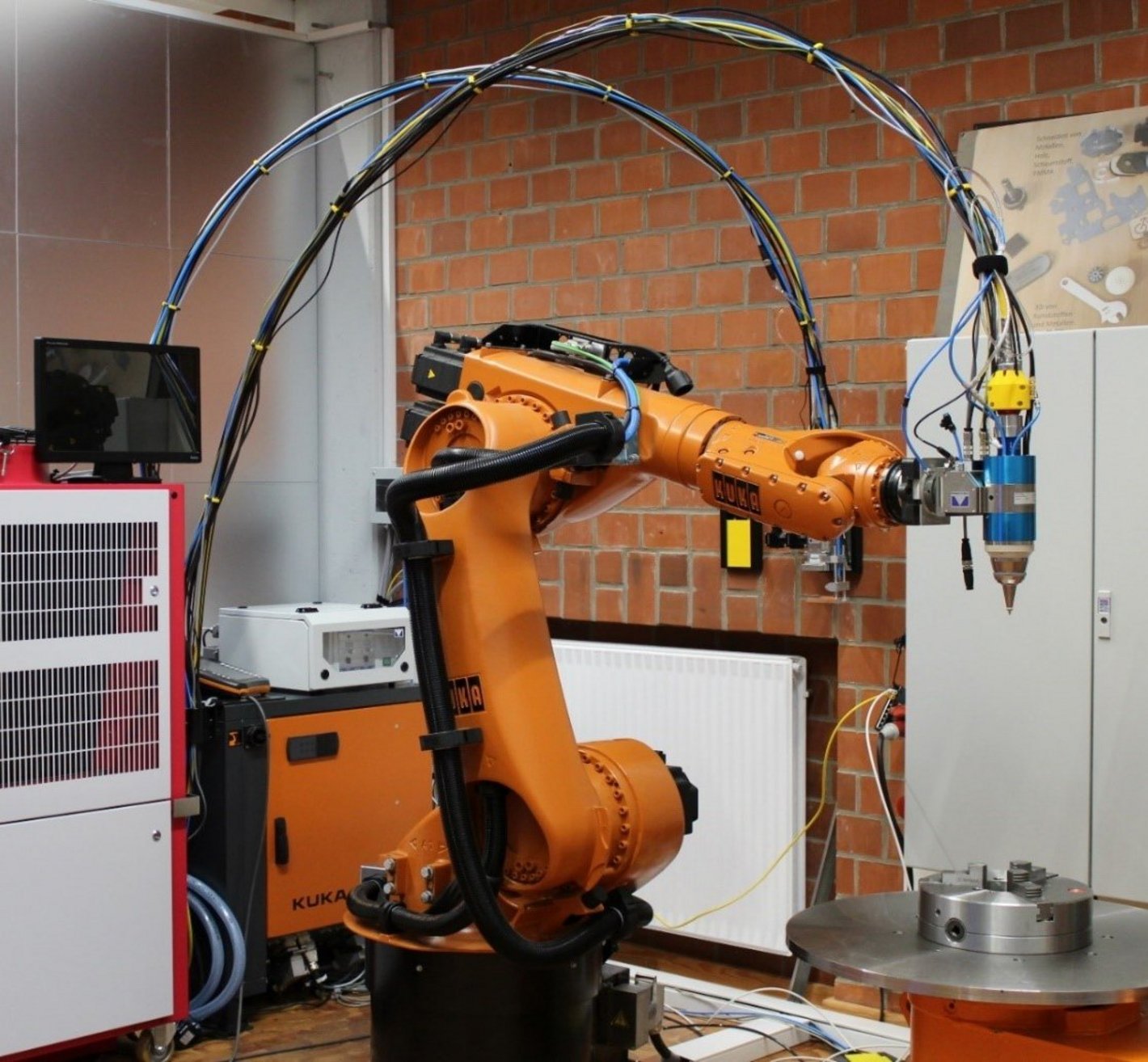
The laser cell is an essential addition to the machine equipment in the field of laser technology. This now enables the laboratory to perform dynamic three-dimensional machining without having to re-clamp workpieces. This is made possible by a KUKA KR 30-3 robot, which features high payload capacity and excellent repeatability, as well as an additional rotary-tilting table. The robot is programmed offline using RoboDK software. [https://robodk.com/]
Thanks to the hybrid laser [https://www.laserline.com/de-int/ldf-serie-mit-strahlkonverter/], the system can operate as both a fiber laser and a diode laser. The fiber laser is used for applications involving the cutting of metallic materials due to its excellent beam quality and a rated power of 2.4 kW. Thanks to the integration of the robotic system, it is also possible to process uneven surfaces or tubes, for example.
When operated as a diode laser, a power output of 4 kW is available. The optical system features a modular design, allowing for quick configuration changes. The resulting adjustments to the laser spot allow for the implementation of various processes. These include the joining processes of laser welding and laser brazing, the joining of plastics, laser cladding, and laser hardening.
The system is supplemented by various process optimization systems. These include distance sensors for cutting tasks, temperature- and speed-dependent power control, and automated clamping options.
You can find more information about the laser and robot here [ Laser Cell Flyer ]
Fiber lasers for two-dimensional cutting applications
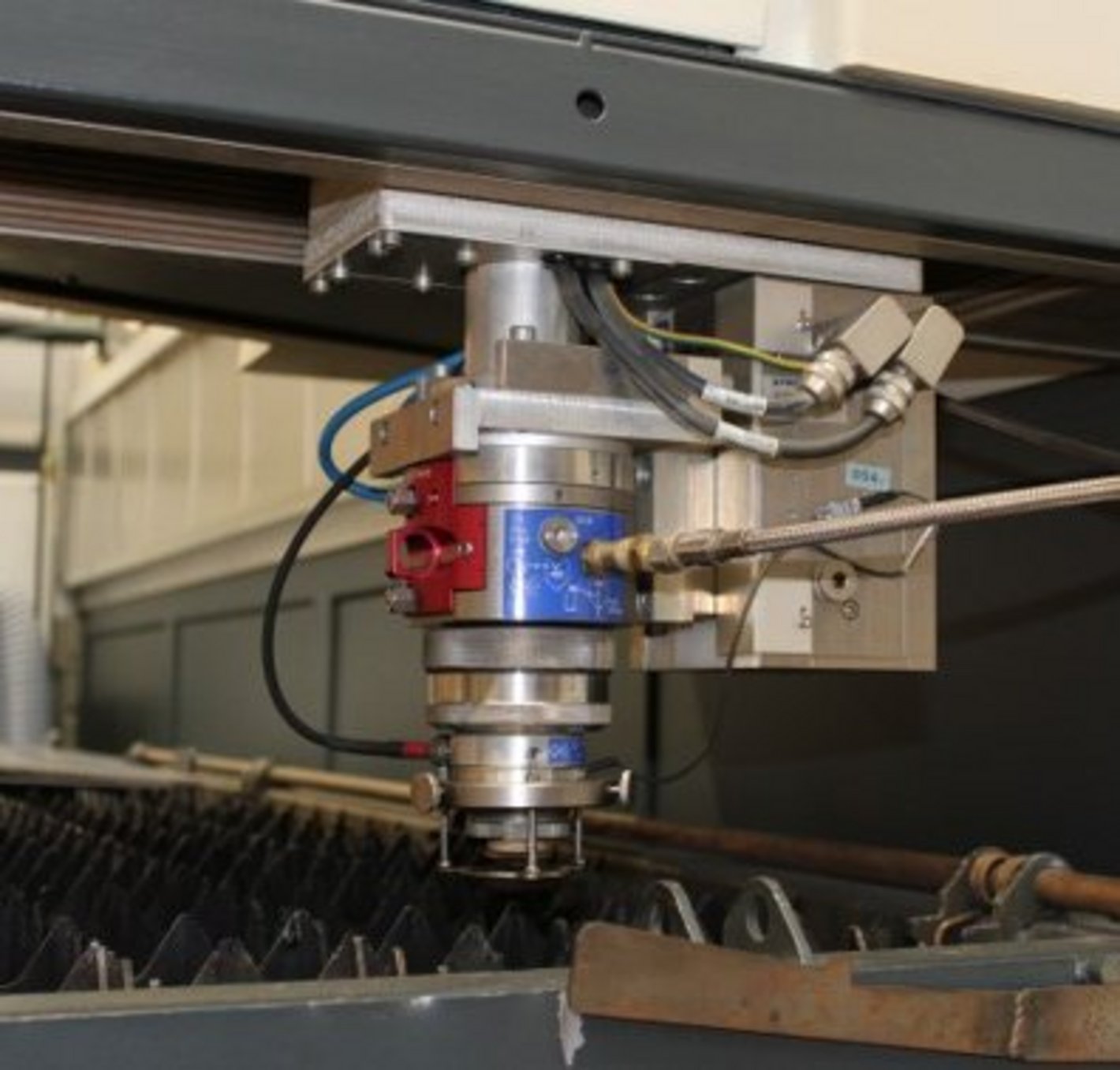
For cutting tasks in the field of sheet metal processing, the laboratory has a Senfeng fiber laser cutting system (1313G) at its disposal. The system uses a 1.5-kW fiber laser from IPG as the laser source, along with a distance-controlled cutting head from Precitech. The processing area measures 1300x1300 mm.
The system is designed to process thin to medium-thickness sheet metal made of ferrous and non-ferrous metals.
Surface Treatment
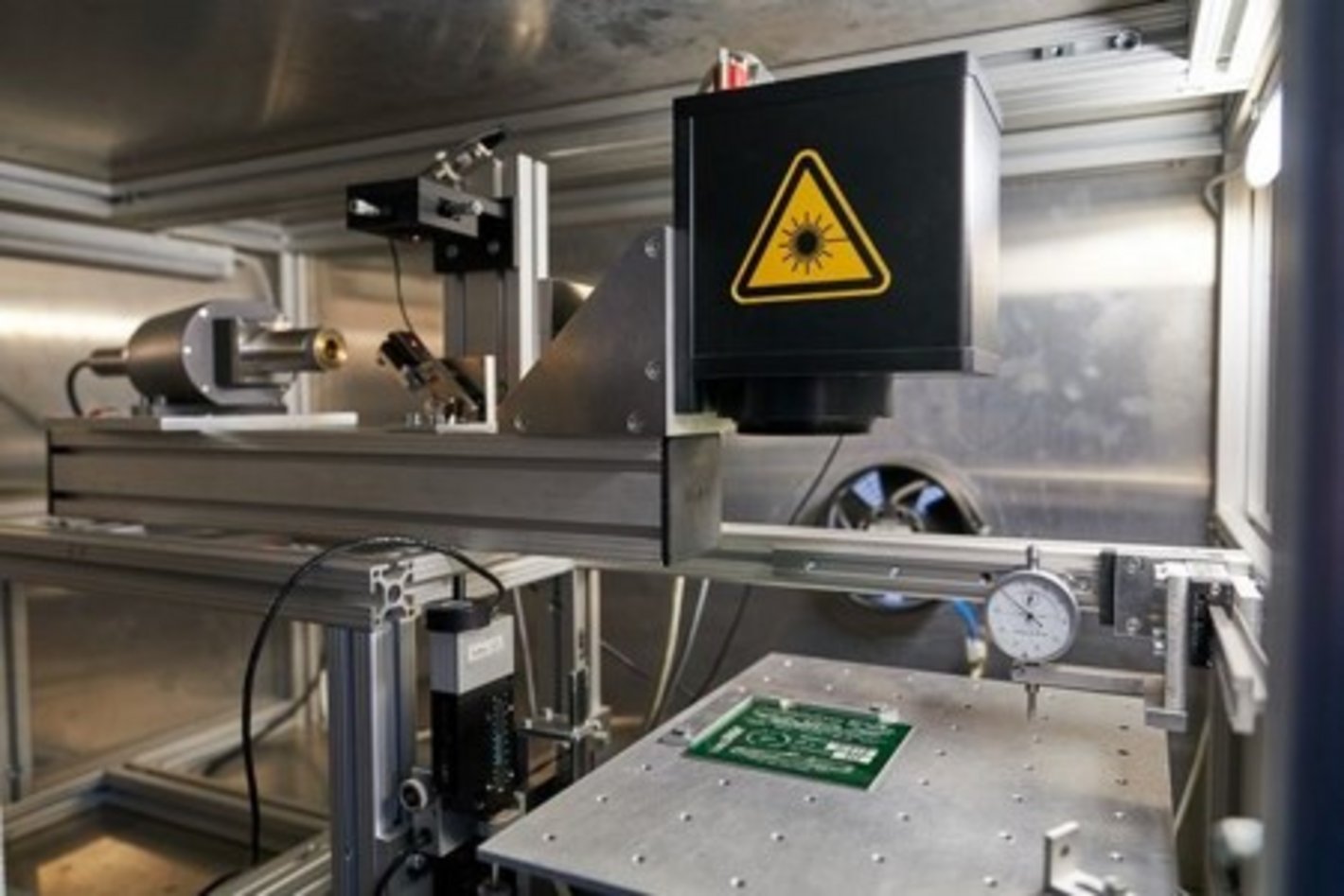
Laser surface treatment is now a standard technology. A wide range of power levels allows for various types of surface and surface-layer processing. Using a high-power laser, high speeds, and high positioning accuracy, it is possible to achieve technological changes—such as hardening—or to create extremely fine patterns on a wide variety of surfaces.
For flexible laser hardening of metals, a 4-kW diode laser system equipped with various optical components for different beam geometries is combined with a robotic system, and the process is controlled via online temperature monitoring. [ Laser Cell Flyer ]
For laser marking, a solid-state laser from IPG Laser GmbH (Model YLR-200, 200 W, focal diameter 50 µm) with a scanner system for beam movement is available. For laser marking, contrasts can be created on the irradiated surface through heat input using annealing colors, engraving, and ablation.
Search