

FEM simulation of a printed rod seal
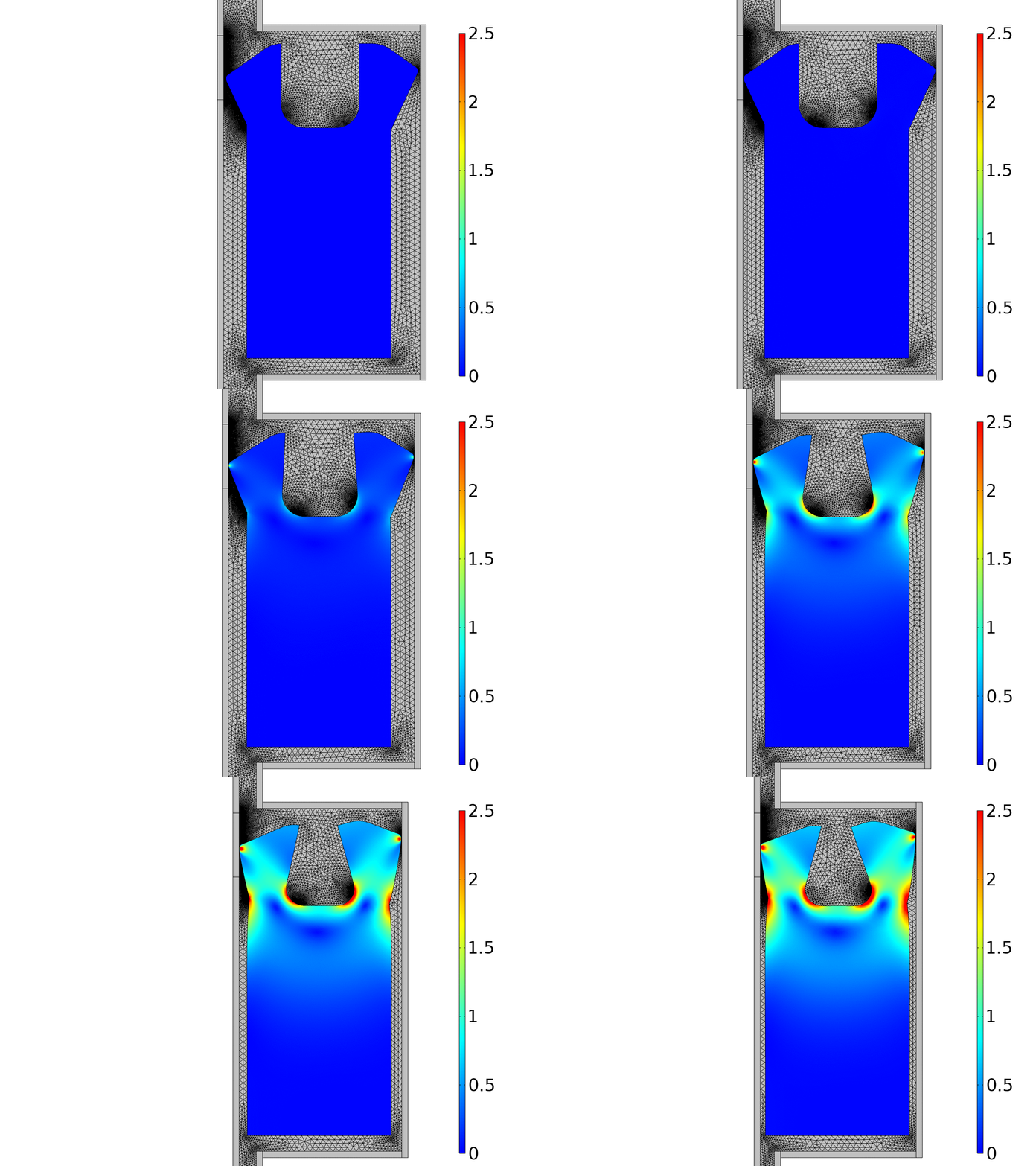
The groove size is initially modeled as "too large". In a time-dependent calculation step, the rod and groove diameters are geometrically corrected. The seal is compressed by introducing contact conditions. Since strong mesh deformations occur during compression, several remeshing steps must be carried out during the calculation.
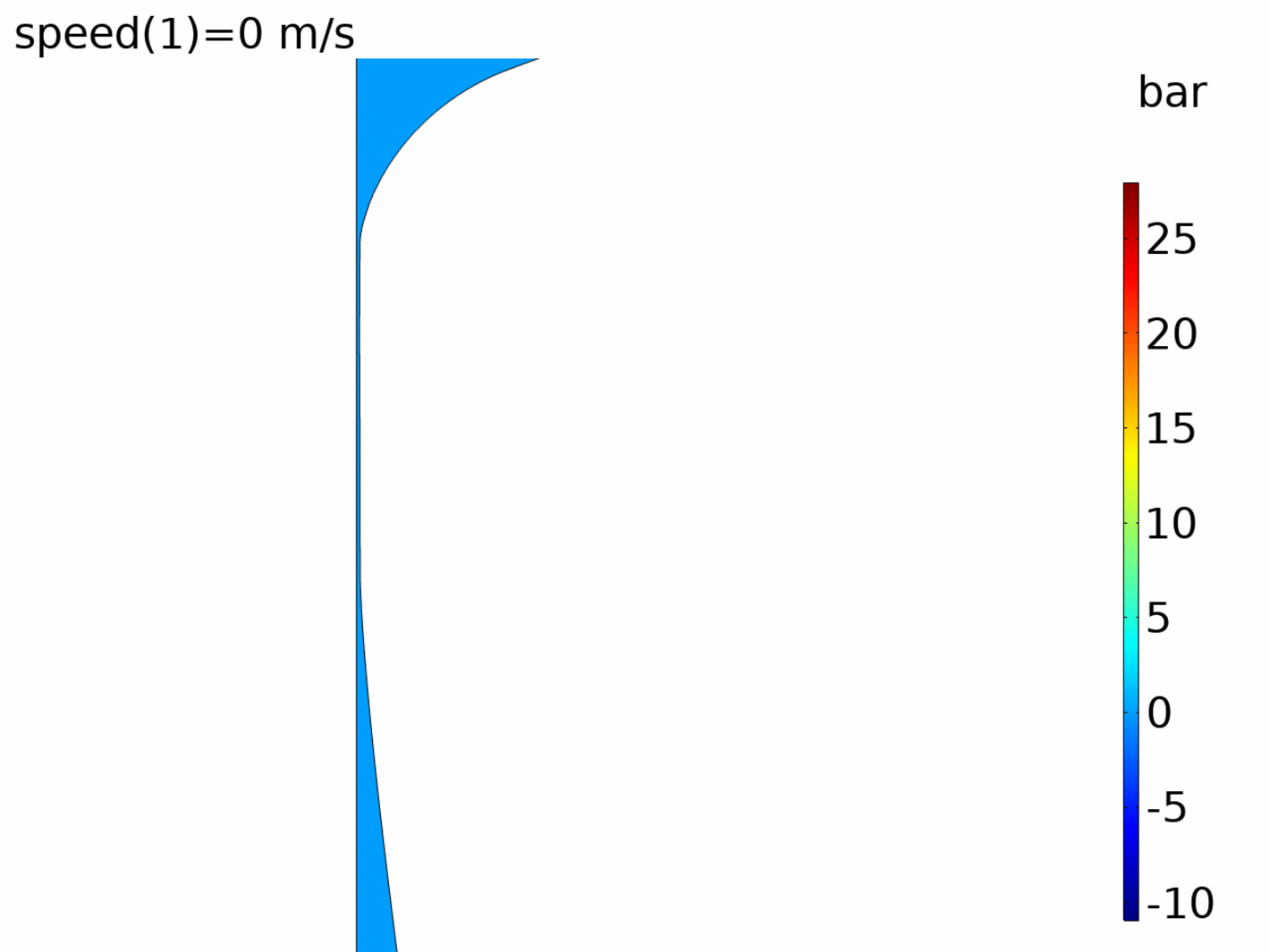
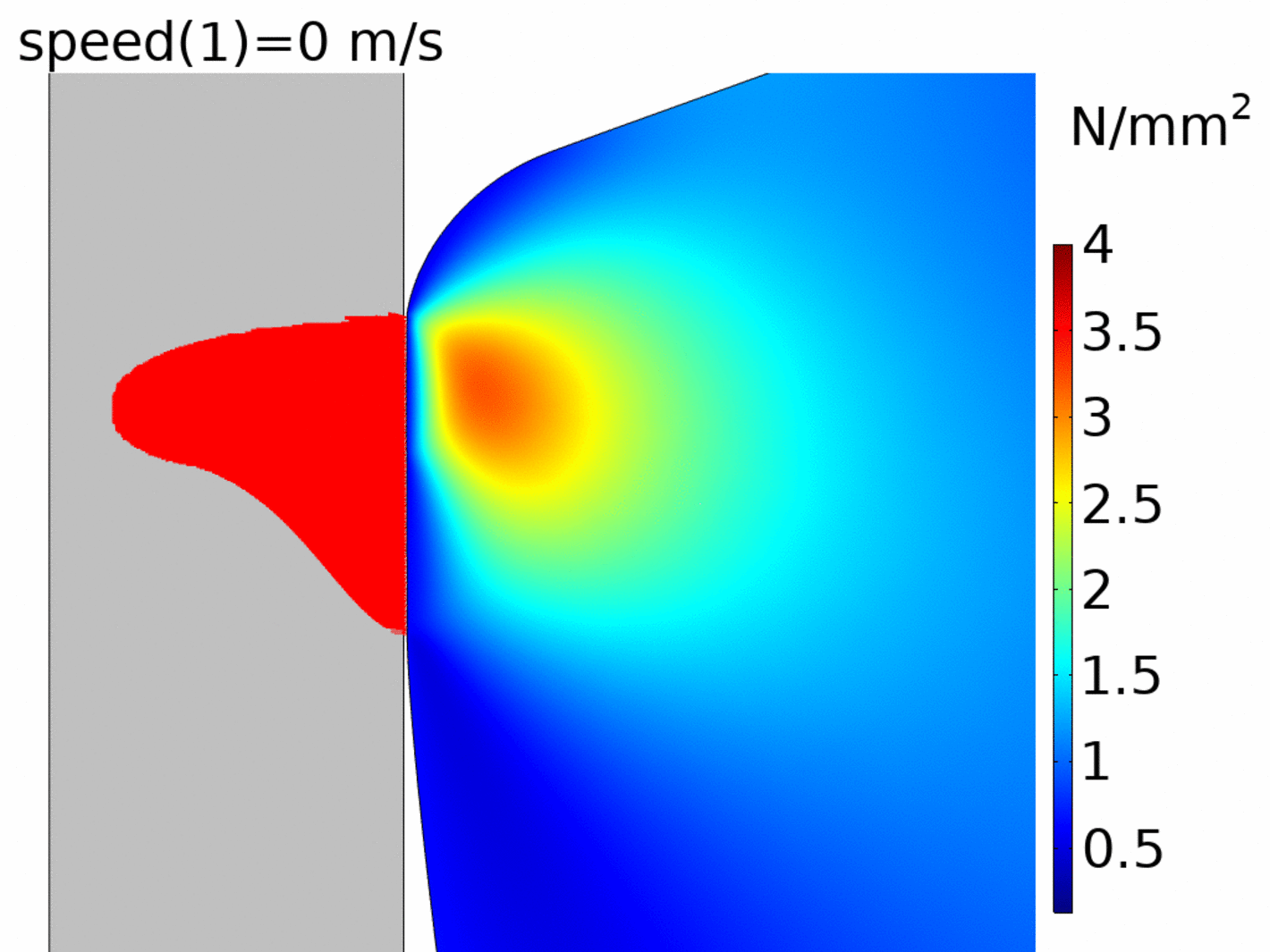
You can see an enlarged view of the left sealing lip. The rod shown on the left edge of the image moves upwards and the speed is gradually increased. By increasing the rod speed, the fluid is pressed into the sealing gap. As a result, the fluid pressure increases and the seal is deformed by the fluid-structure interaction.
Dynamic rod seals (DFG individual funding)
Dynamische 2-Komponenten-Dichtungen aus additiver Fertigung: DFG Einzelförderung 2021-2024
Using a 3D printer to quickly produce replacement seals on offshore platforms or other remote locations, e.g. for wind turbines: this is to be made possible by a project funded by the German Research Foundation. The aim of the project is to combine the production of two plastic parts and their combination to create a seal suitable for use in just one production step.
The project partners of the Laboratory for Machine Dynamics are the Laboratory for Additive Manufacturing at Emden/Leer University of Applied Sciences and the German Institute for Rubber Technology.
Specifically, the aim is to develop and manufacture dynamic rod seals made from two components consisting of an elastomer and a thermoplastic. Currently, such components are used in such a way that both components are initially manufactured separately, transported to the remote place of use and assembled together there. However, this requires extensive availability of spare parts on site. The team at the university wants to change this and develop a process in which both components are manufactured simultaneously and directly at the place of use using additive manufacturing ("3D printing"). However, the development of such products requires complex simulations beforehand, which are carried out at the Laboratory for Machine Dynamics. The lubricating film, which forms between the seal and the rod and is only a few micrometres thick, is crucial for the function of the seal. It is calculated in the Laboratory for Machine Dynamics using elastohydrodynamic (EHD) simulation. This involves modeling the non-linear elastic behavior of the seal on the one hand and the flow behavior of the liquid lubricating film (Reynolds equation) on the other. These models are coupled to form an overall simulation in order to calculate the exact film height, the pressure distribution and the sealing effect. The resulting finite element simulation is carried out in Comsol on a powerful workstation using GPU computing. It allows optimization calculations to be carried out, e.g. to find particularly suitable geometries that are not possible with conventional manufacturing techniques, but are possible with additive manufacturing.
Search