

Piston Engine Laboratory
Welcome to the homepage of the Piston Engines Laboratory.
In the Piston Engines Laboratory, students specializing in plant engineering and design learn how piston engines work. In particular, internal combustion engines are studied and optimized in terms of performance, fuel consumption, and emissions.
What are piston engines?
Piston engines constitute the largest group of power and work machines. In particular, internal combustion engines are the most widely used thermal power engines in the world. This is due in part to their flexibility, but also to the high efficiency of internal combustion engines. Internal combustion engines are used in power ranges from a few watts to several megawatts. There are internal combustion engines that achieve 54% efficiency. In terms of efficiency, the internal combustion engine is the best thermal engine available.
What happens in the lab?
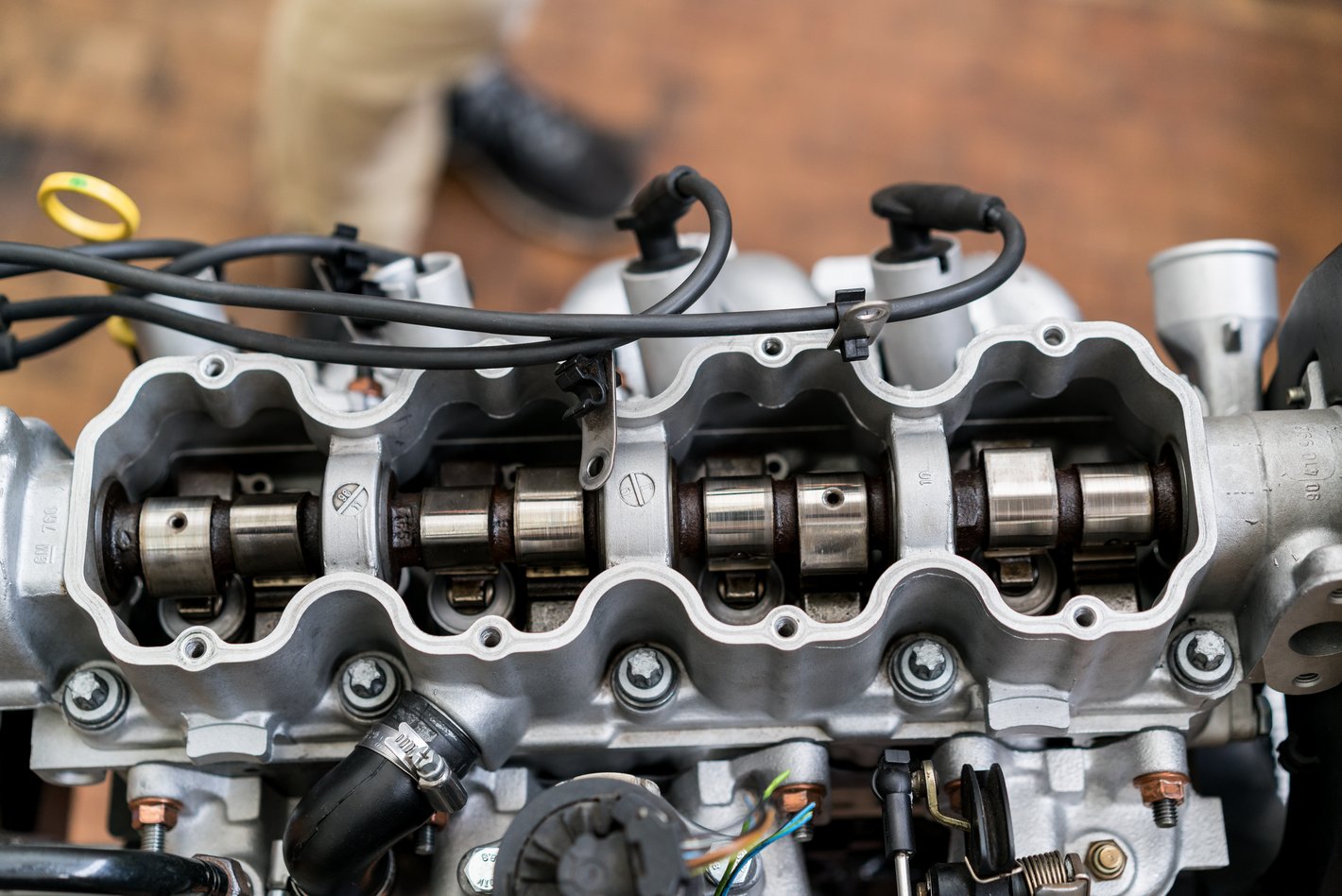
In the laboratory, students will learn about the design, function, and operating characteristics of internal combustion engines. For this purpose, we have a modern single-cylinder research engine that allows us to measure the most important parameters. In addition, this engine allows design parameters to be adjusted during operation or during brief measurement pauses. This enables the operational behavior to be optimized on the test bench.

The laboratory experiments are directly related to the content of the “Reciprocating Engines” lecture. The topics discussed theoretically in the lecture can be “tested out” in the lab.
In addition to the lab sessions, students also have the opportunity to carry out projects as part of their studies.
Lab experiments:
- Disassembly and reassembly of an internal combustion engine: The goal here is for students to become familiar with the actual structure of the engine
- Partial-load optimization of a gasoline engine.
- Full-load optimization of a gasoline engine
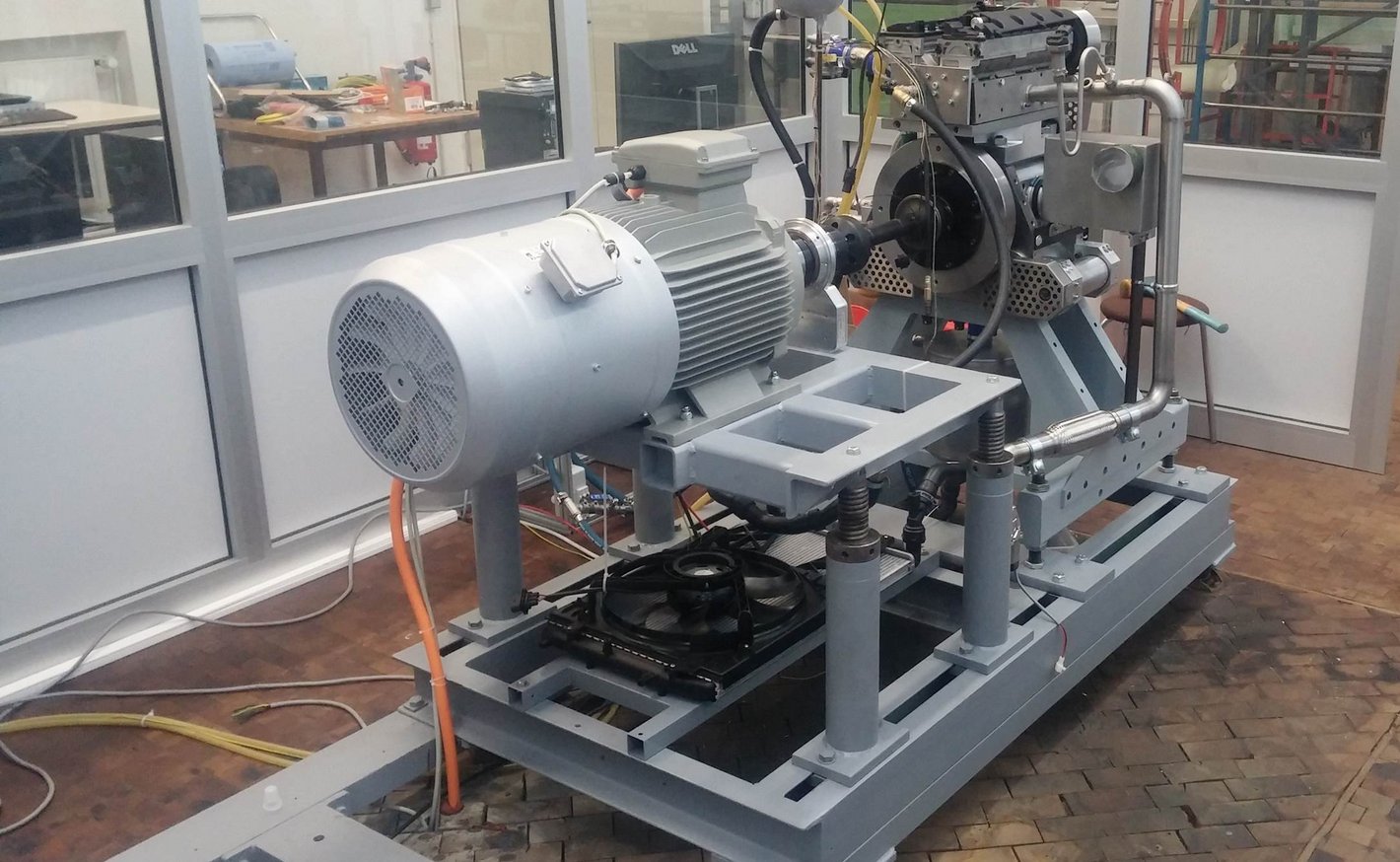
Special Features:
- Towing and braking operation via coupling with an electric motor (Figure 1)
- Towing mode: The internal combustion engine is towed by the electric motor
- Braking mode: The electric motor is towed by the internal combustion engine and functions as a generator (supplying electricity to the power grid)

- Adjustable: Crushing gap and compression ratio by inserting spacer plates
- Adjustment of valve timing by rotating or replacing the camshaft
- Control of the test bench’s operating parameters via a freely programmable Simulink engine control system (student thesis)
- All operating parameters are decoupled from one another and can be adjusted separately
- Ignition timing
- Injection timing
- Injection duration
- Throttle valve opening angle


Monitoring of operating pressure via cylinder pressure indication (Figure 4) and other parameters:
- Operating pressure, intake and exhaust temperatures
- Oil pressure, as well as oil and coolant temperatures
- Ignition and injection signal timing
- Lambda
- Torque





Search