

Mechatronics Laboratory
Hello and welcome to the Mechatronics Laboratory website.
On this page, we would like to take this opportunity to introduce the areas of research in our lab and what we offer to students, prospective students, collaboration partners, schools and students, and anyone who is simply curious.
VDI Guideline 2206 states:
Mechatronics refers to the synergistic interaction of the disciplines of mechanical engineering, electrical engineering, and information technology in the design and manufacture of industrial products, as well as in process design.
The name is derived from the terms “mechanics,”“electronics,” and“computer science.”
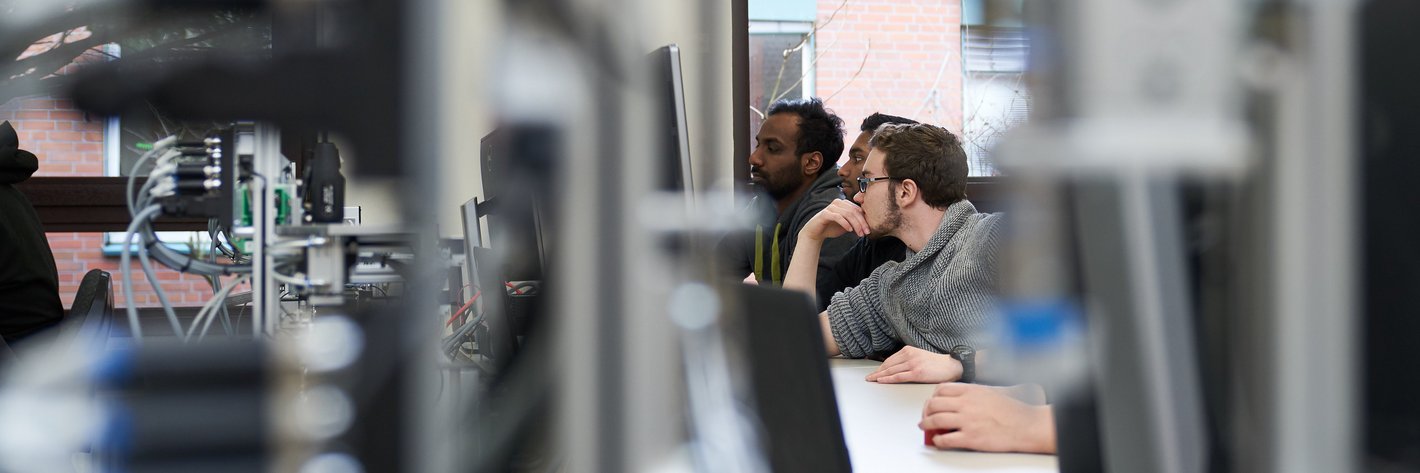
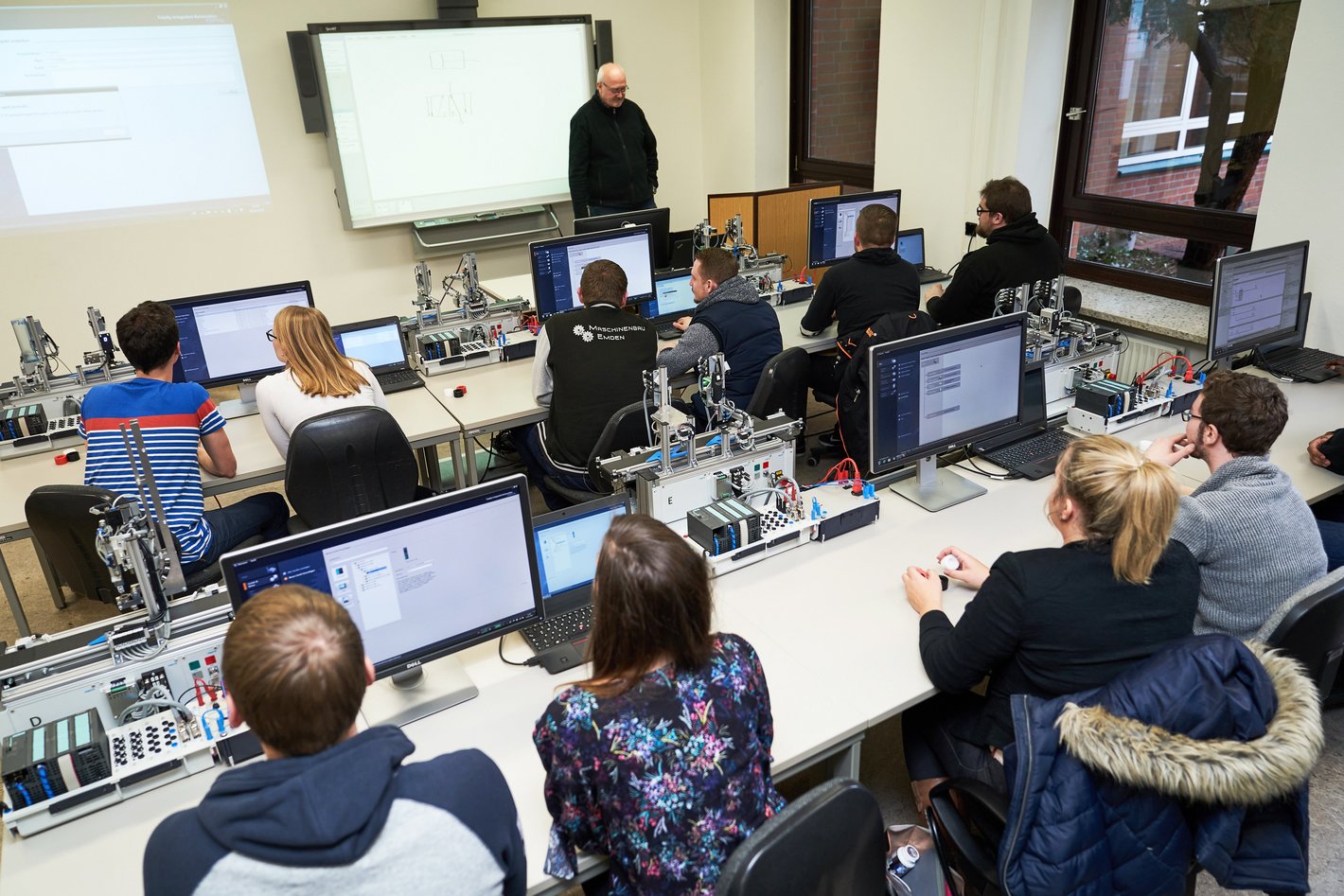
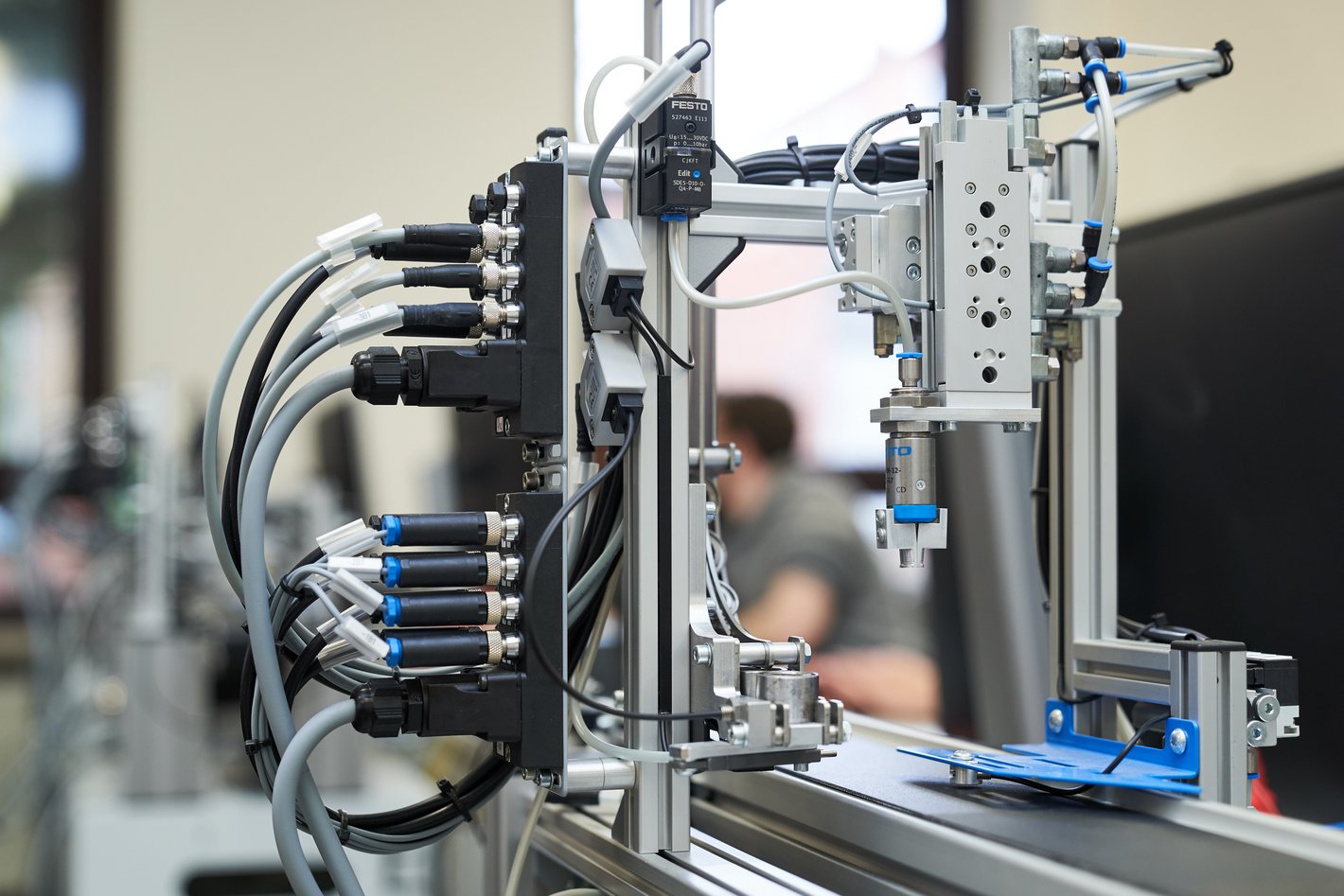
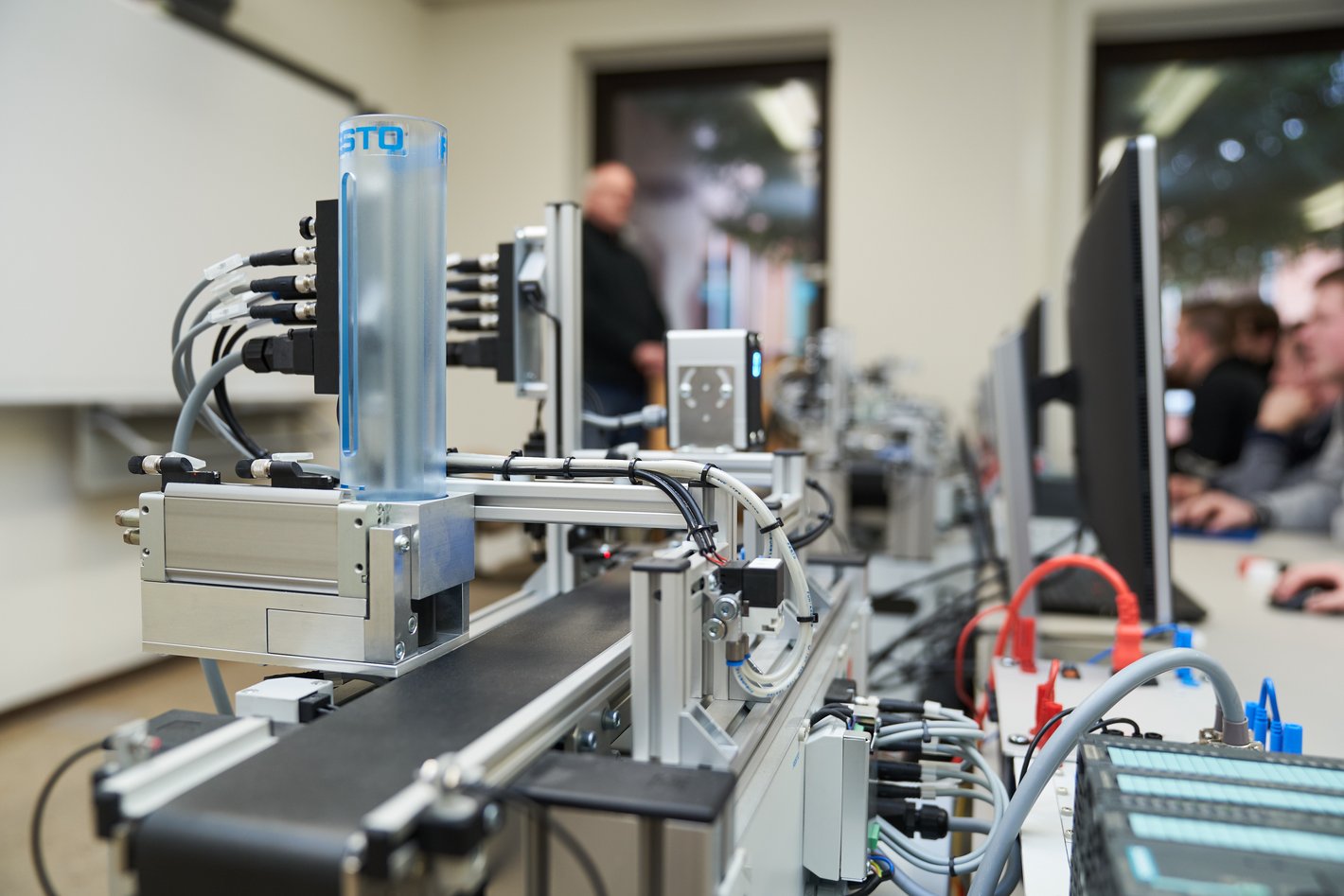
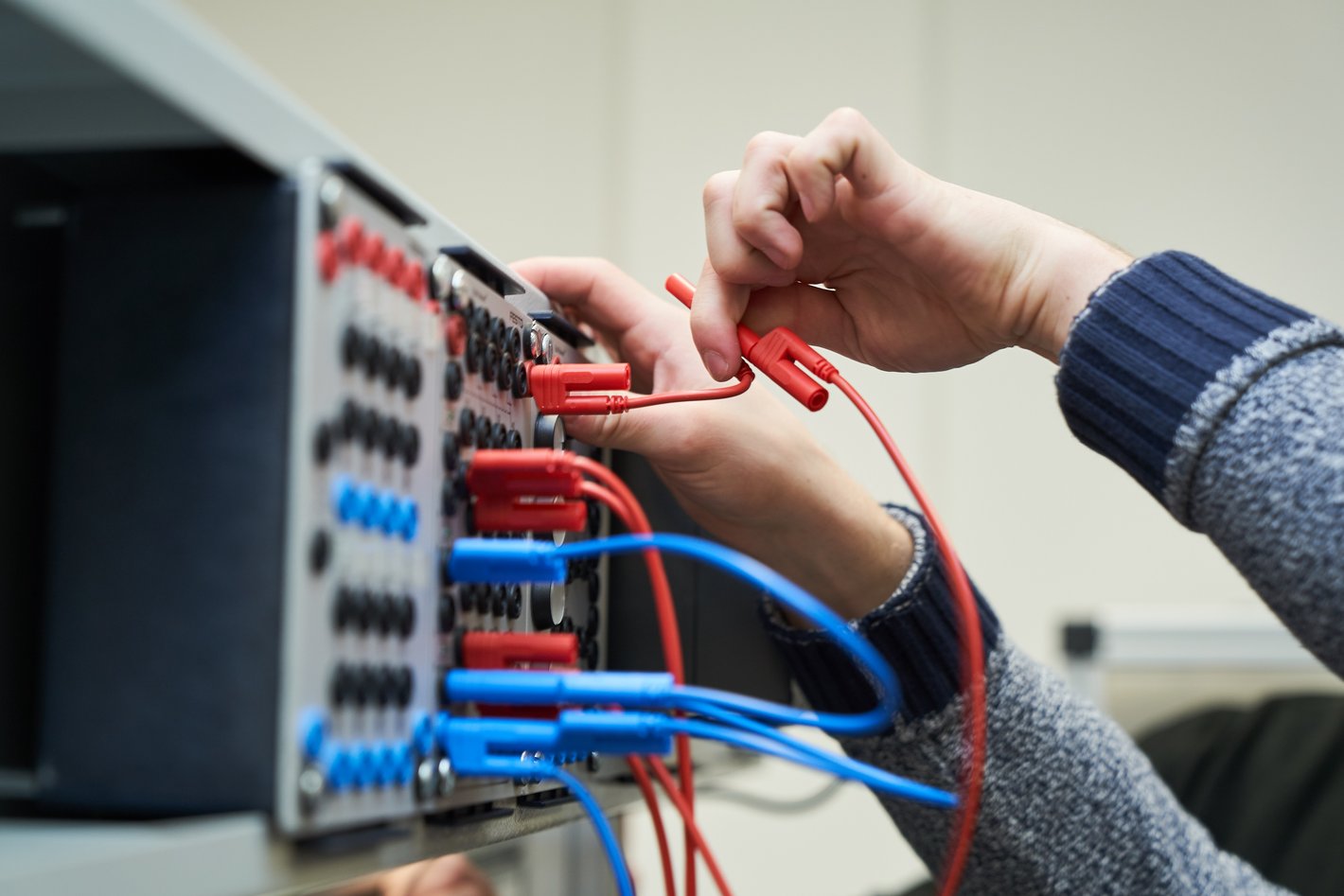
Students gain comprehensive knowledge of automation technology through hands-on models, such as the use of sensors to distinguish between materials and colors, to determine position, to measure dimensions and distances, and much more.
They learn how control signals interact with valves, relays, and electric motors, master the basics of logic, and integrate all these aspects into a functioning system.
Various simulation programs are available for student training:
- FluidSIM® Circuit Diagram Design and Simulation Software for Pneumatics, Hydraulics, and Electrical Engineering
- CIROS® Automation Suite consists of five individual software packages and enables realistic 3D simulation even of highly complex automation systems
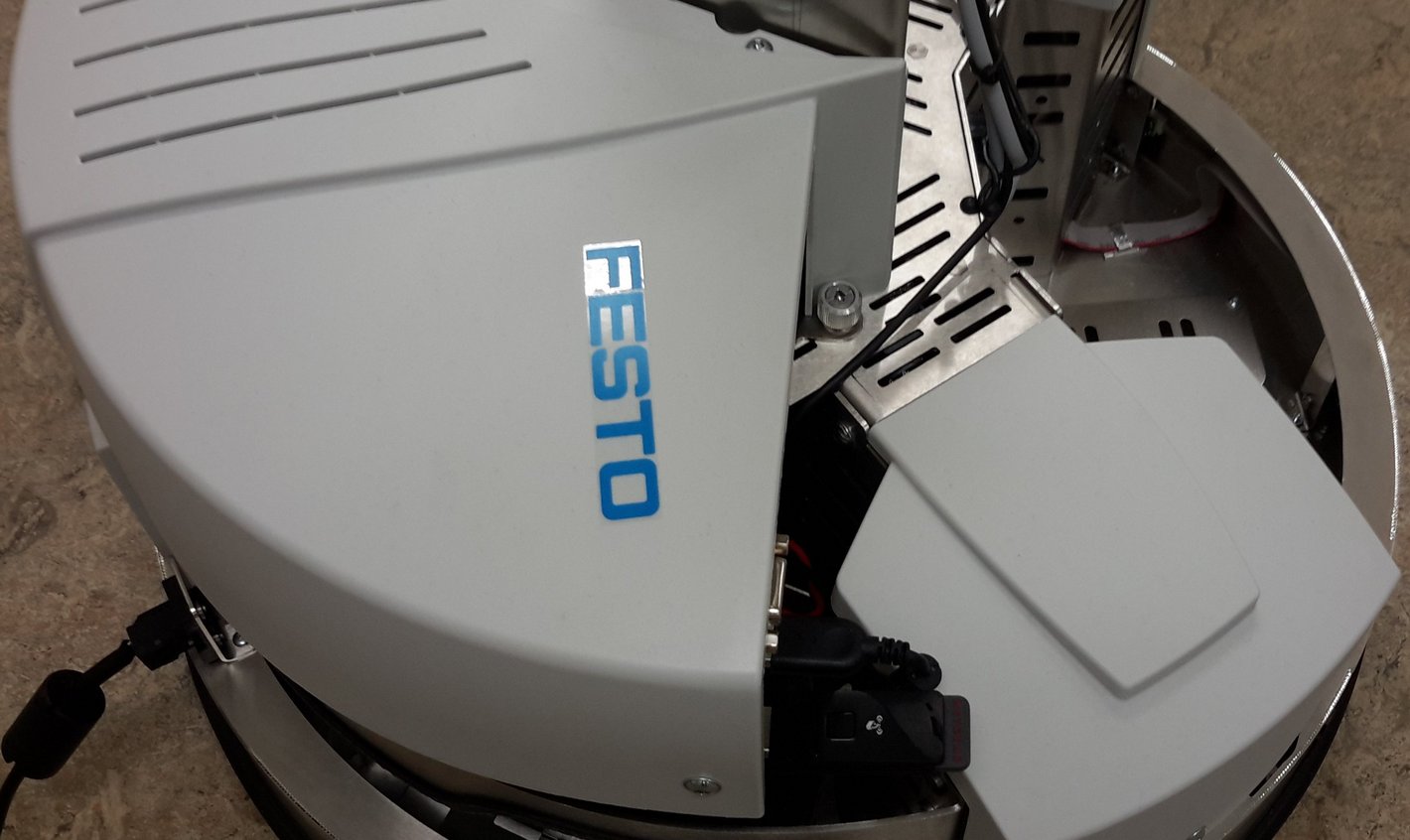
- Robotino® SIM Professional is a virtual learning environment for working with Robotino®.
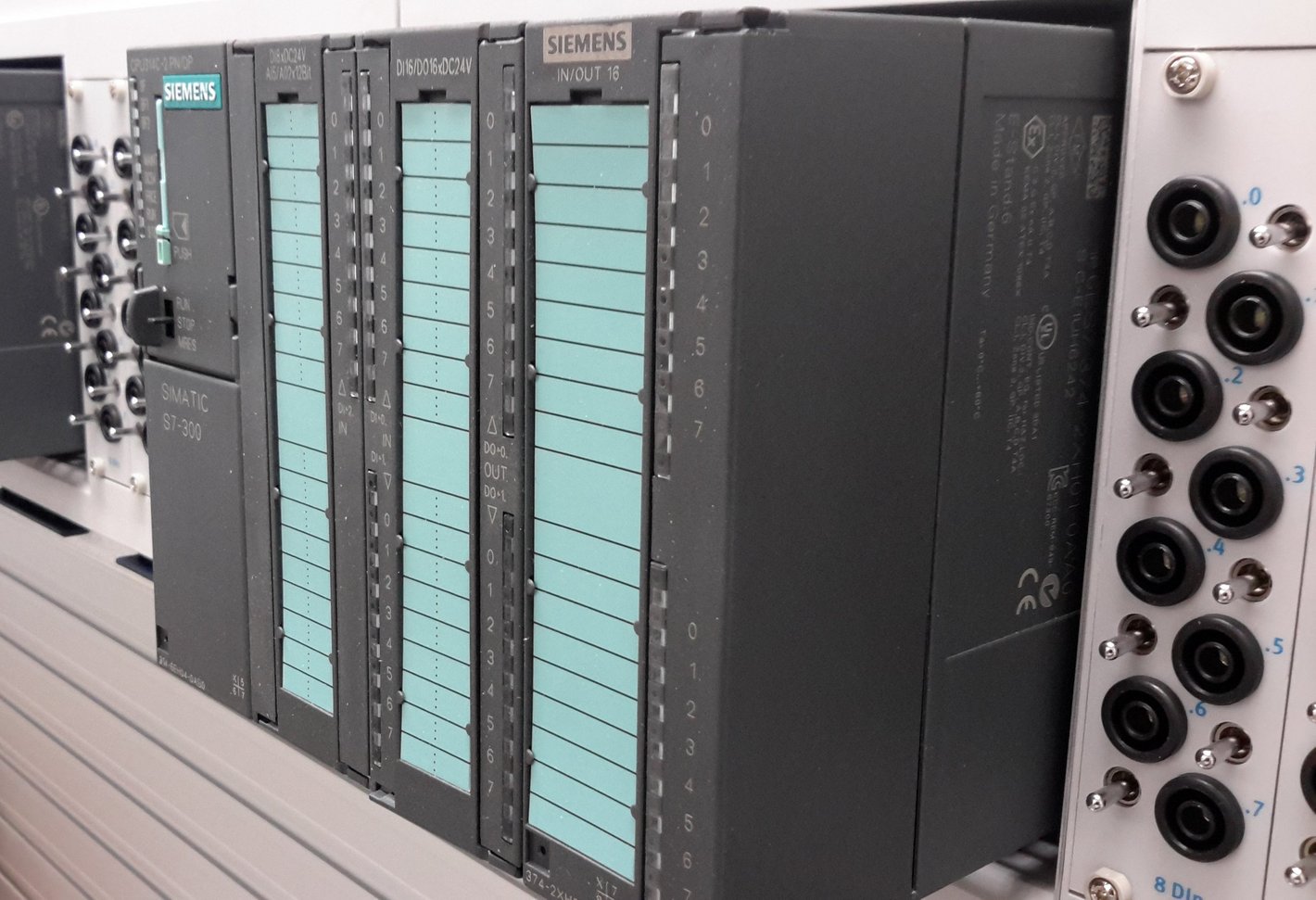
In the field of control technology, Siemens S7-300 programmable logic controllers (PLCs) are primarily used. These PLCs are programmed using the Step 7 or TIA Portal (Totally Integrated Automation Portal) software.
Students learn about the capabilities and limitations of these controllers. They become familiar with contact diagrams, function blocks, and instruction lists. They connect inputs to outputs, apply delays, count, store values, and force actions—and in the end, the system does exactly what it’s supposed to.
Student Project
Beehive Scale
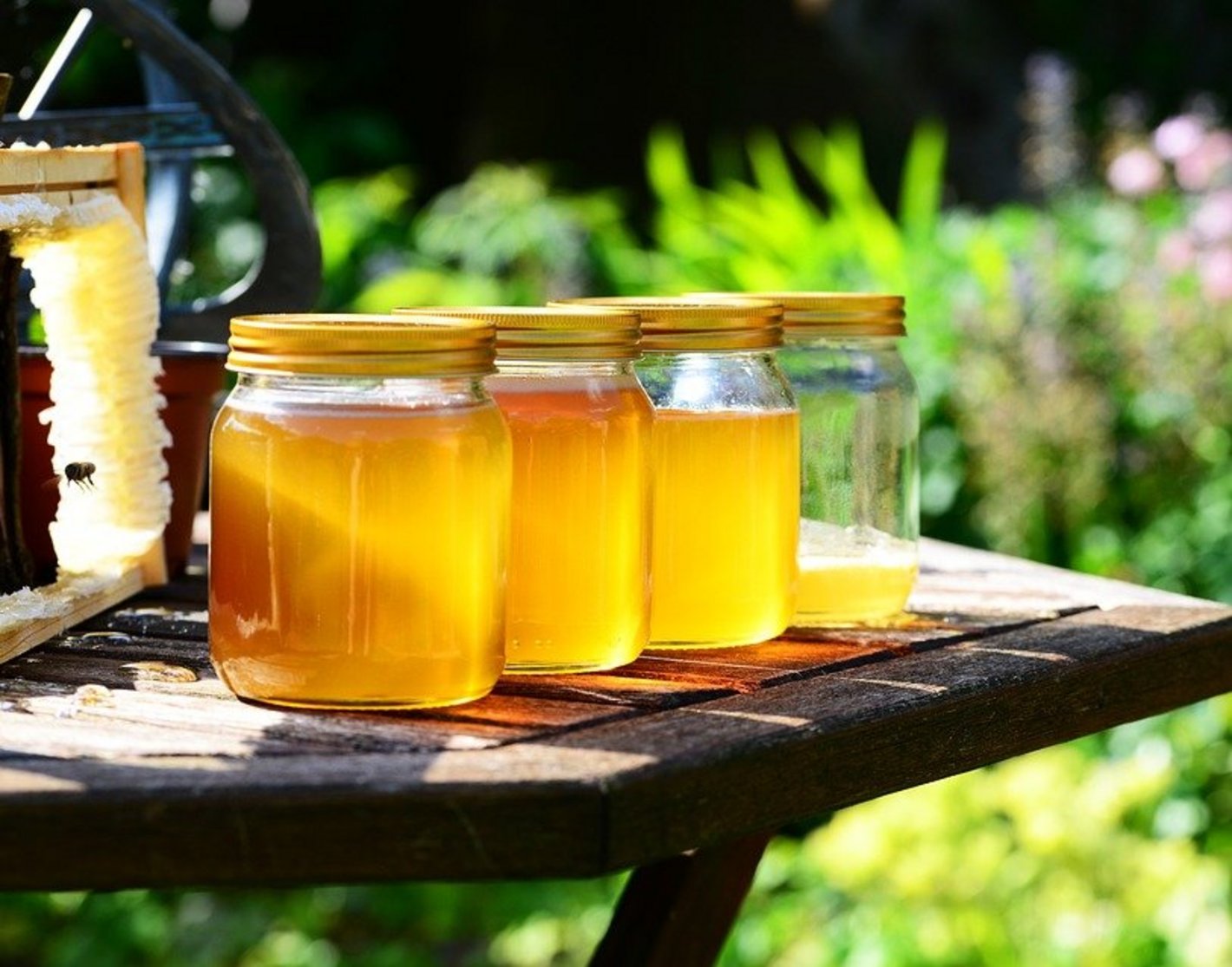
Bee hive scales are used for remote monitoring of bee colonies. The scale allows conclusions to be drawn about various parameters of the beehive, such as changes in weight over time, overloading of the beehive, theft of the beehive, etc.
As part of this project, a beehive scale was developed with a focus on simple, technical, and cost-effective implementation.
Student Project
Linear axis
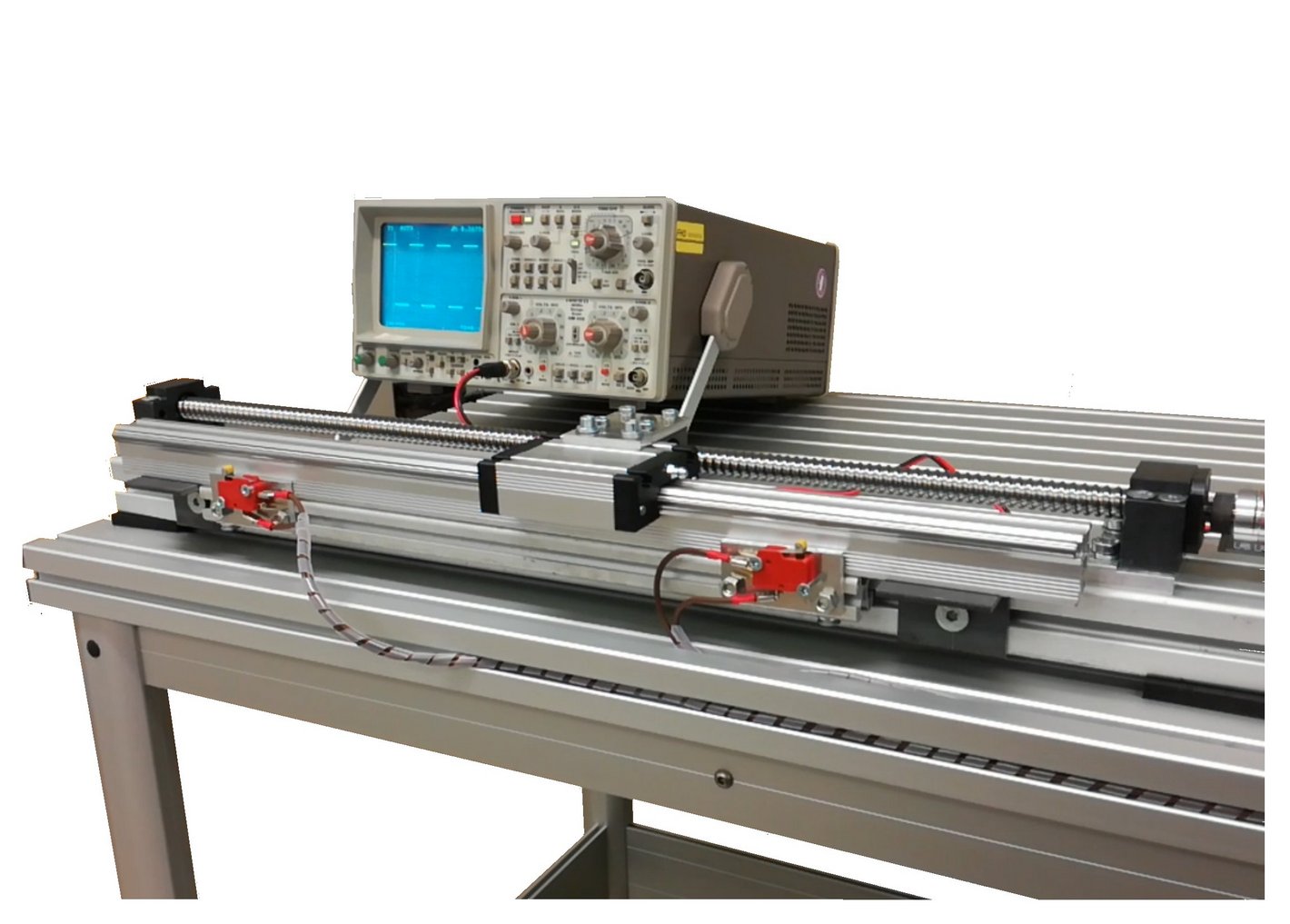
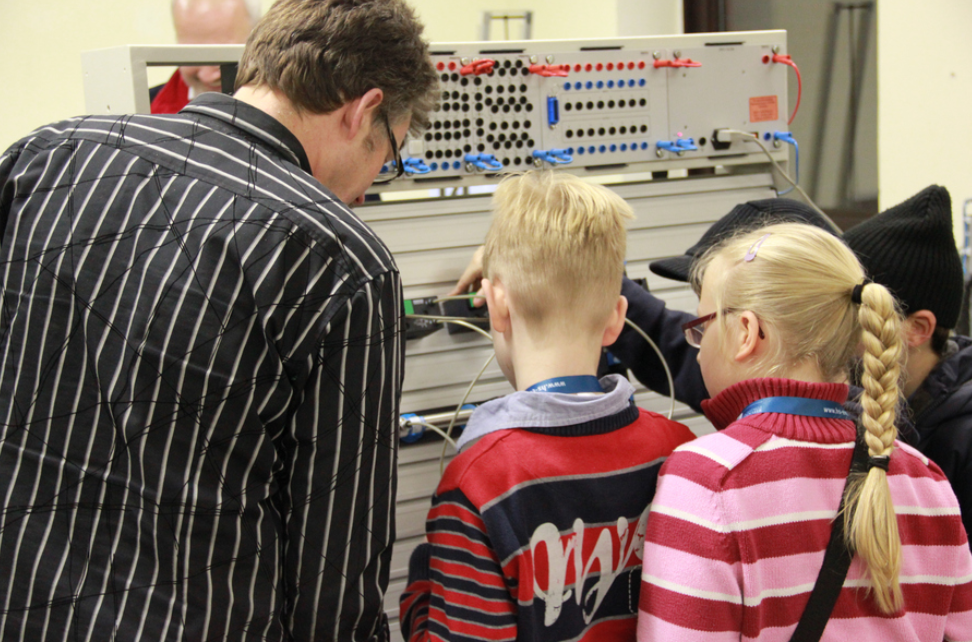
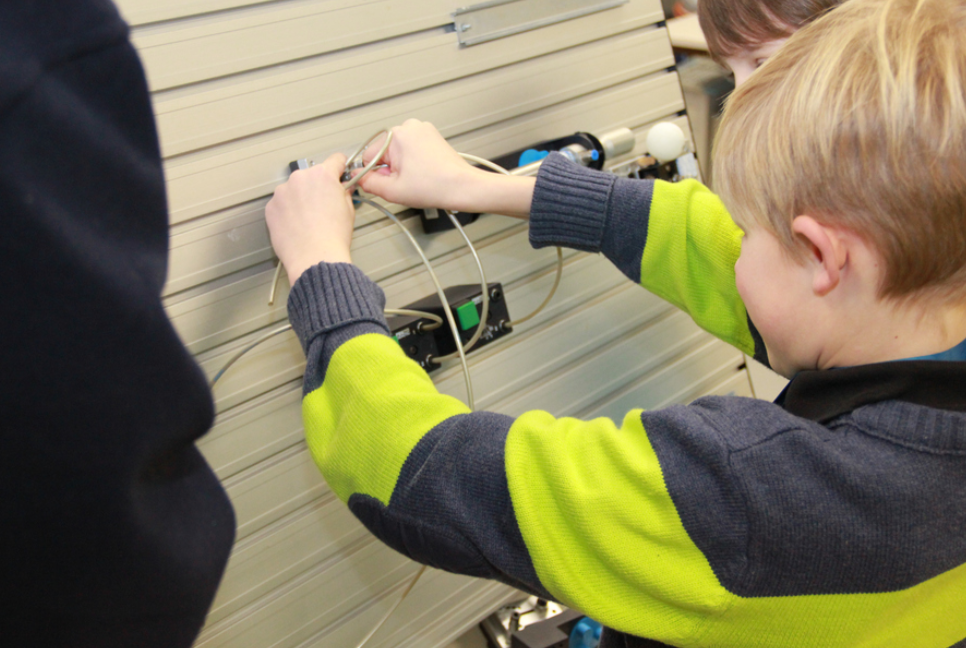
If the schedule for our other tasks allows, we supervise not only students but also groups of high school students from local schools in the mechatronics lab. The tasks assigned to them are primarily related to the lab’s areas of focus.
An example: Optimizing/maximizing the speed of the linear motion of a linear axis driven by a stepper motor




Search